Van Life With Dogs: Safety, Gear & Real Tips (2026 Guide)
Van Life with Dogs Essentials 2026: Practical Checklist and Gear Guide

Living the van life with dogs can be one of the most rewarding ways to travel. Your best friend is always with you — whether you’re waking up beside the ocean or hiking mountain trails.
But van life works best when the basics are handled properly.
Dogs don’t care how big the van is. What matters to them is routine. When they know where they sleep, when they eat, and when they exercise, they usually settle in quickly.
This guide walks through the essentials of van life with dogs in 2026, including safety setups, gear, routines, and the practical things that make life on the road easier for both of you.
Table of Contents
-
Travel Safety for Dogs in a Van
-
Sleeping & Comfort in Small Spaces
-
Feeding and Water Systems
-
Heat, Cold & Climate Management
-
Can You Leave a Dog Alone in a Van?
-
Is Van Life Stressful for Dogs?
-
Best Dog Temperaments for Van Living
-
Real-World Challenges (And Fixes)
-
Recommended Dog Travel Gear
-
Cost of Van Life With a Dog
-
Frequently Asked Questions
Van Life With Dogs: What It’s Really Like
Most problems people run into with van life and dogs are not space problems.
They are routine problems.
Most dogs adjust surprisingly well to van travel if three things stay consistent.
• A fixed sleeping spot
• Predictable feeding times
• Regular exercise
Break those patterns and things can get chaotic fast.
Stick to them and most dogs settle surprisingly quickly.
Van Life With Dogs: Travel Safety Essentials
In a sudden stop at highway speed, anything loose inside the van moves.
Dogs are no exception.
An unrestrained dog can be injured or become a serious hazard during an accident. Proper restraint is one of the most important safety decisions you will make.
There are two setups most van travelers use.
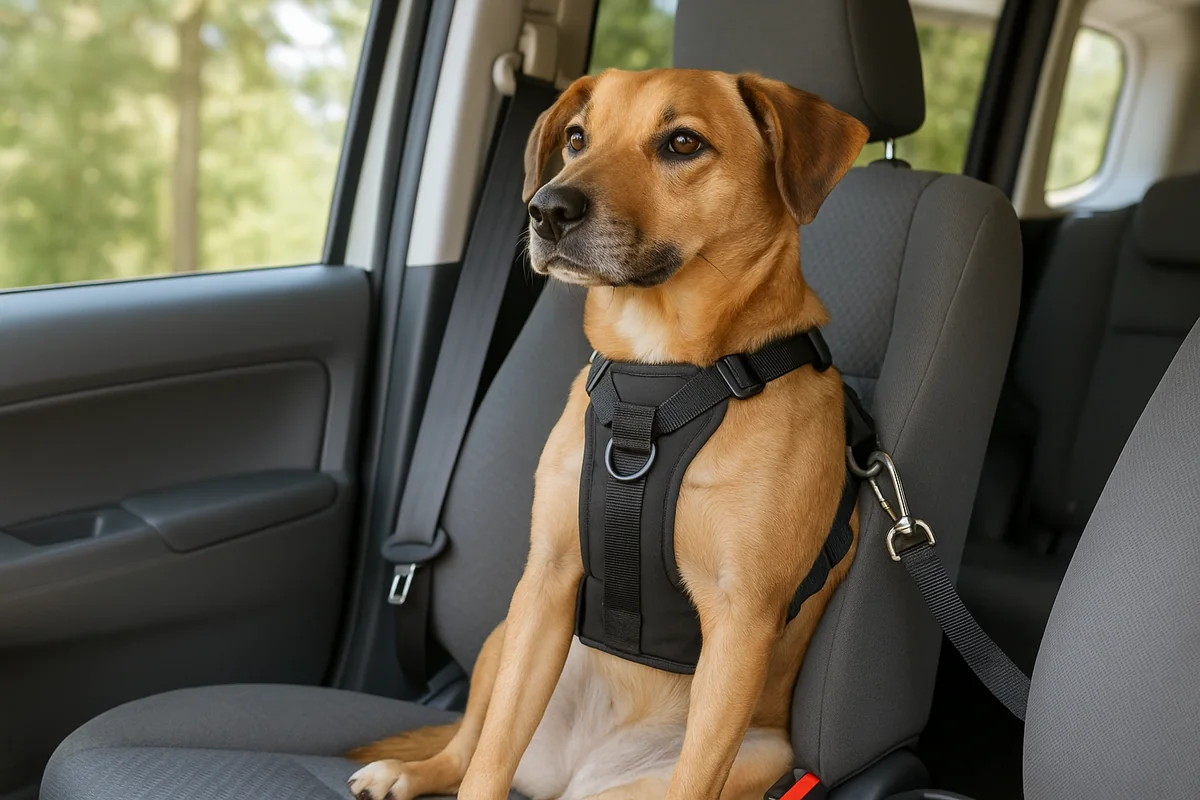
Crash-Tested Travel Harness
This is the simplest solution for many setups.
Travel harnesses work well for:
• Smaller vans
• Dogs under about 70 pounds
• Part-time van travel
Look for harnesses with:
• Verified crash testing
• Reinforced stitching
• Metal anchor points
Avoid harnesses marketed for travel without any safety certification.
👉 Check current prices for crash-tested dog travel harnesses on Amazon →
Anchored Travel Crate
Crates are often the safest option for larger dogs or full-time van life.
They also give your dog a defined resting space, which helps reduce anxiety while traveling.
Look for crates with:
• Impact-tested construction
• Strong ventilation
• Secure mounting options
👉 See well-rated heavy-duty dog travel crates on Amazon →
Test your setup on short drives before committing to long travel days.
Sleeping & Comfort in Small Spaces
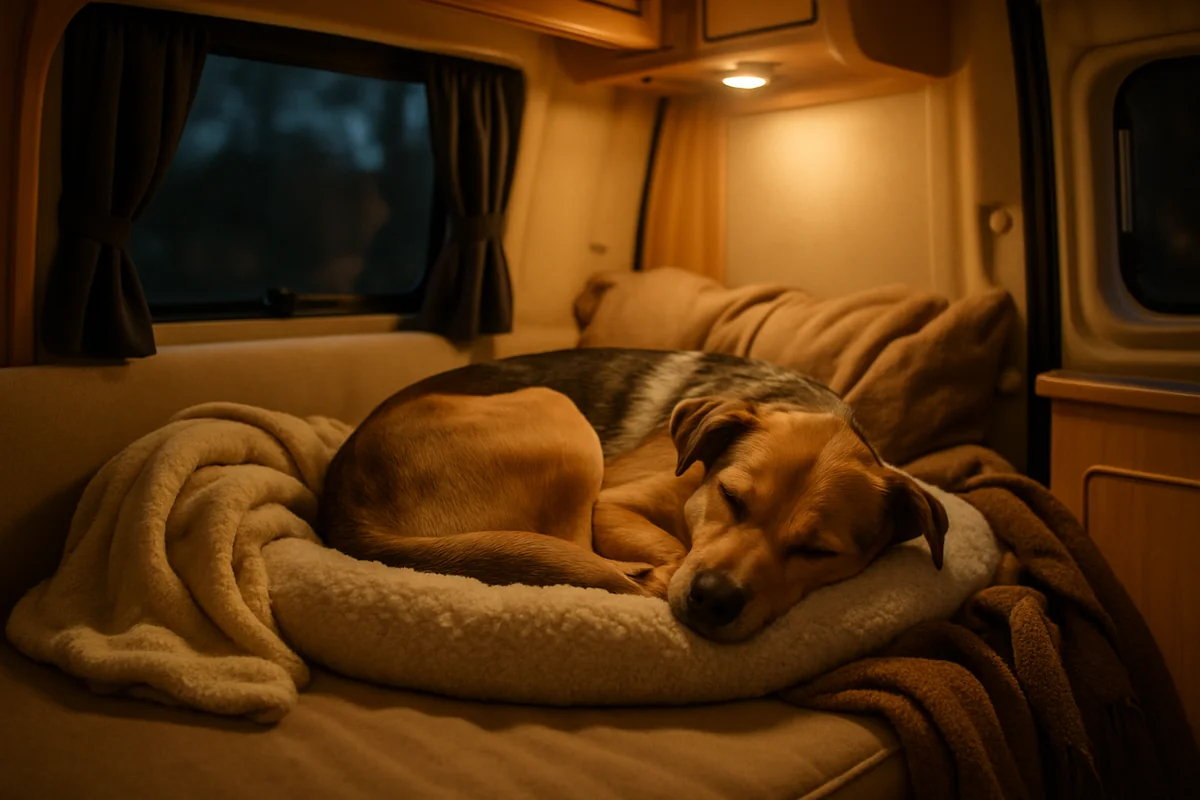
Hard van floors get cold.
And in summer, heat builds faster than most people expect.
Comfort isn’t a luxury — it helps regulate stress and sleep quality.
Dogs that sleep well behave better during the day.
A simple sleeping setup usually includes:
• Orthopedic or insulated bed
• Washable cover
• Waterproof liner
After one muddy hike you’ll quickly understand why washable covers matter.
👉 Browse orthopedic dog beds suitable for van life on Amazon →
If you travel through warmer climates, cooling mats can help stabilize temperature overnight.
👉 View popular cooling mats for dogs on Amazon →
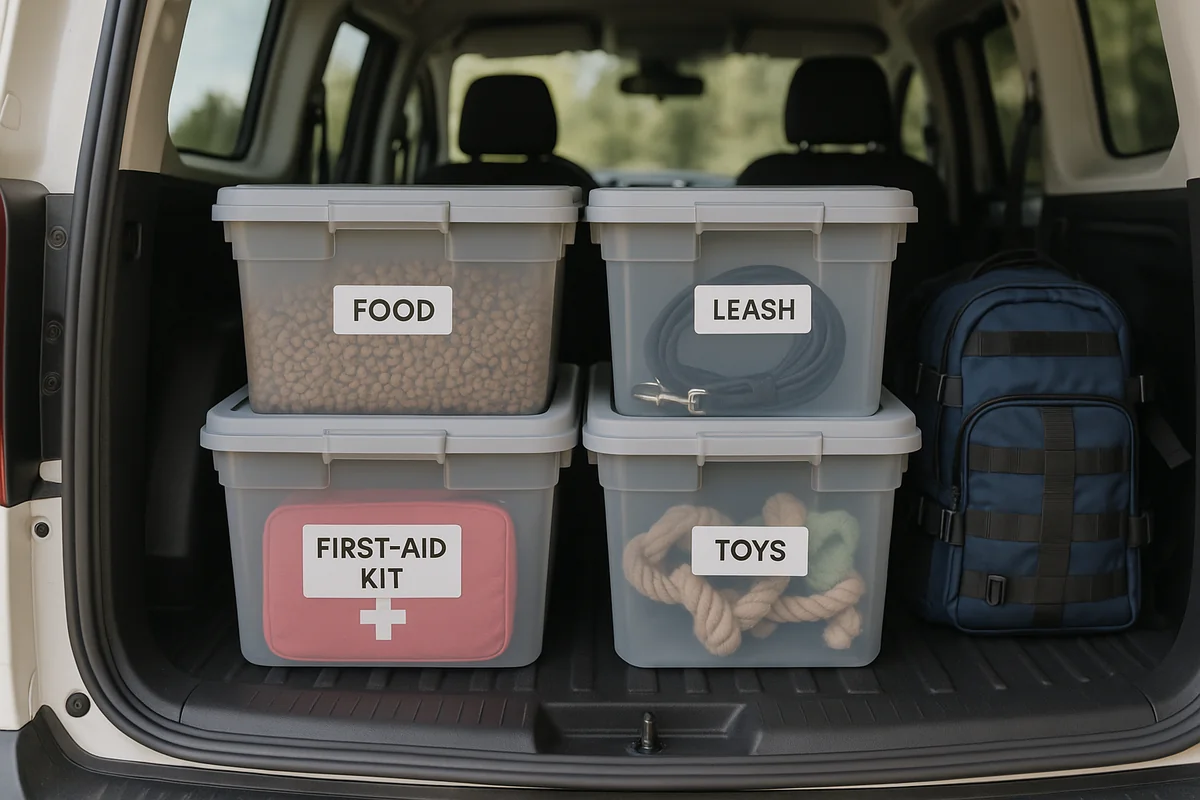
Feeding & Water Systems That Work
Food becomes a problem in vans when it isn’t stored properly.
Soft food bags attract rodents.
Loose scoops spill.
Open bowls slide.
A simple feeding system avoids most headaches.
Smart Food Storage
Most van travelers use:
• Sealed storage bins
• Pre-measured daily servings
• A small backup supply
Pre-measuring meals makes feeding easier after long travel days.
You don’t want to be scooping kibble in a dark parking lot late at night.
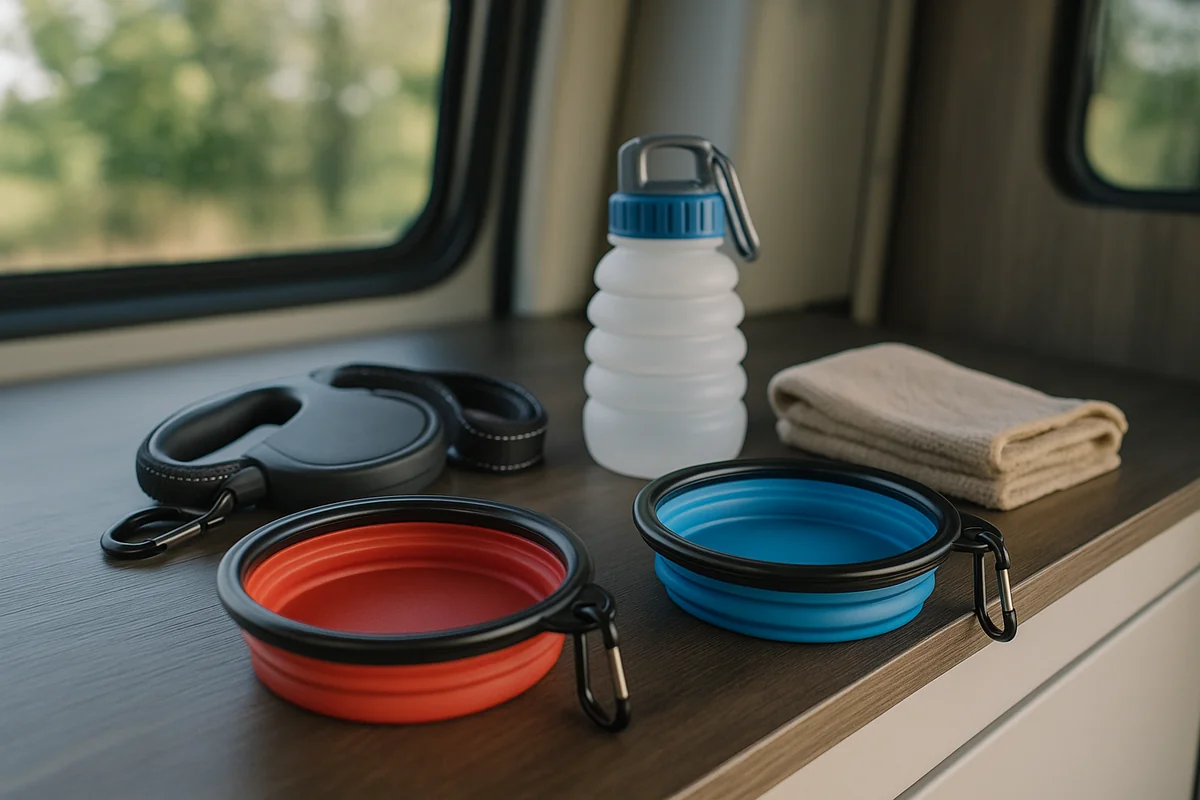
Water Storage
A 2–5 gallon gravity container works well for most van setups.
It’s simple, reliable, and doesn’t require power.
👉 Compare large-capacity travel water containers on Amazon →
Collapsible travel bowls also help keep things tidy inside small spaces.
👉 See compact travel dog bowls designed for road trips on Amazon →
Heat, Cold & Climate Management
Heat is the biggest risk factor when living in a van with dogs.
Even on a mild 70°F day, interior van temperatures can rise quickly once the sun shifts.
Shade that worked at 9am might be gone by noon.
Managing Heat
Most experienced van travelers rely on:
• Reflective window covers
• Roof vent fans
• Strategic shade parking
Cracked windows alone are not enough.
Air movement matters.
👉 Explore 12V roof vent fans commonly used in camper vans on Amazon →
Always plan where the sun will be later in the day, not just where it is now.
Managing Cold
Cold weather is usually easier to handle.
Focus on insulating your dog from the metal floor.
Good options include:
• Elevated beds
• Insulated sleeping pads
• Thick bedding
Dogs lose body heat through contact surfaces, so floor insulation matters more than blanket thickness.
Can You Leave a Dog Alone in a Van?
This is one of the most common questions about van life with dogs.
The answer depends entirely on temperature stability.
Short absences in mild weather are often manageable.
Extreme heat or cold changes the situation quickly.
If you occasionally need to step away, many travelers use temperature monitors.
These devices send alerts to your phone if the van gets too hot or too cold.
👉 Check temperature monitors that send phone alerts on Amazon →
Having real data removes guesswork.
Is Van Life Stressful for Dogs?
Most dogs adapt well to van life once routines settle.
The first few weeks may include:
• Restlessness
• Extra alertness
• Slight appetite changes
This adjustment period is normal.
Most dogs settle faster when:
• Sleeping location stays consistent
• Exercise remains regular
• Feeding times stay predictable
Skip two walks in a row and you’ll usually see the difference.
Energy builds quickly in small spaces.
Best Dog Temperaments for Van Living
Temperament matters more than breed.
A calm large dog often adapts better than a high-energy small dog.
Dogs that do well in vans usually:
• Handle new environments calmly
• Are comfortable resting in crates
• Have moderate exercise needs
High-energy breeds can thrive too, but they require consistent exercise and stimulation.
Training before travel makes a huge difference.
Real-World Challenges (And Practical Fixes)
Van life with dogs is rewarding, but it isn’t perfect.
A few challenges show up regularly.
Muddy Paws
Rainy hikes happen.
Keep a towel near the door and make wiping paws automatic.
Barking in Campgrounds
Campgrounds amplify sound.
Crate covers or quiet commands help prevent overstimulation.
Motion Sickness
Some dogs need time to adjust to travel.
Short practice drives usually solve the problem.
Most issues are not major failures, just small oversights.
Recommended Dog Travel Gear
Certain pieces of gear make van life significantly easier.
Travel Harness
A crash-tested harness provides secure restraint while still allowing some movement.
👉 Check current prices for crash-tested dog travel harnesses on Amazon →
Travel Crate
Crates provide both safety and a defined sleeping area.
👉 See well-rated heavy-duty dog travel crates on Amazon →
Orthopedic Travel Bed
Supportive bedding helps protect joints during long trips.
👉 Browse orthopedic dog beds suitable for van life on Amazon →
Cooling Mat
Useful for warmer climates where nighttime heat lingers.
👉 View popular cooling mats for dogs on Amazon →
Temperature Monitor
Helps prevent dangerous heat buildup when you step away briefly.
👉 Browse van temperature monitors for pet safety on Amazon →
Cost of Van Life With a Dog
Adding a dog to van life does increase costs slightly.
Typical expenses include:
• Dog food
• Routine veterinary care
• Preventative medications
• Replacement gear
Unexpected costs sometimes include emergency vet visits or replacing worn bedding and restraint equipment.
Planning ahead prevents surprises.
Frequently Asked Questions
How do I keep my dog cool in a hot van?
Use reflective window covers, park strategically in shade, and keep air circulating with roof vent fans. Offer water frequently and monitor temperatures carefully.
What restraint is safest for van travel?
Crash-tested harnesses and anchored crates provide the best protection during sudden stops or accidents.
How much food should I bring?
Measure daily portions and bring a small backup supply in sealed storage bins.
Can multiple dogs live in a van?
Yes, but each dog should have a defined sleeping space and proper travel restraint.
Are some breeds better suited for van life?
Temperament matters more than breed. Calm, adaptable dogs tend to adjust more easily.
Final Practical Advice
Van life with dogs isn’t complicated.
It’s structured.
Start with safety.
Make comfort reliable.
Keep routines consistent.
When those systems are in place, van life becomes much easier, for both of you.
It’s much easier to build those systems at home than try to solve problems on the road. When things are set up properly, van life with dogs can be one of the most rewarding ways to travel.
- Van Life With Dogs: Safety, Gear & Real Tips (2026 Guide)
- Van Life Cost Calculator 2025: Estimate Your Monthly Van Life Budget
- Starlink for Van Life: Setup, Costs & Internet Guide (2025)
- 30 Van Life Gadgets Under $30 on Amazon (2025 Guide)
- Van Life with Disabilities: Accessible Campervan Living Tips
- 50 Must-Have Van Life Accessories on Amazon
- Best Vans for Van Life 2025 | Top Conversion Picks
- Top 7 Free Vanlife Campsites in the U.S. (2025 Guide)
- Top 5 Power Stations for Van Life in 2025
 >
>
Leave a Reply